Showing posts with label indie films. Show all posts

Wednesday, August 2, 2017

Night Fever: 'It Comes at Night' and Psychological Terror vs. Gore


As summer bakes on and we hit 105 degrees today and 108 tomorrow, we fantasize about being in a dark, shaded forest in October at 55 degrees. That's the setting of this overlooked indie, directed by Trey Edward Shults, that is being billed as a 'horror movie' but is more a psychological drama/thriller.

It Comes at Night stars edgy Joel Edgerton (fantastic, as usual) as Paul, husband and father who is hiding out in a cabin in the woods with his wife Sarah and teenage son Travis after some sort of unnamed health catastrophe has seemingly affected the world (nuclear war, plague, zombies?).


Their life is upended as Will, a young man, breaks into their sealed-up house looking for food, and winds up becoming their captive. They quickly ease their grip on Will and Paul goes with him to bring back his wife and young son to their cabin.


They all return safely to stay in the cabin but let's just say paranoia, cabin fever, anxiety, and creeping fear take hold of everyone involved and things go from bad to worse.

Although promoted with a very "scariest bits" trailer (above), this movie was not a "zombie film" or even much of a gory horror B-movie. It is truly a psychological horror film about survival, family, and fear. Also throw on heavy doses of mistrust and breakdown of society's rules and a dash of the (un)kindness(?) of strangers.


With a tiny budget and few recognizable actors, the small-scale It Comes at Night delivers with a fantastic sense of mood and place, a slow burning turning of the screws, and some stellar acting. Unanswered questions and motivations are littered throughout the picture to put you on edge and keep you guessing what's happening and why are people so cruel.

Deep, dark, and brutal, It Comes at Night scores more with its mundane, quiet take on the end of the world than the latest seasons of cacophony on The Walking Dead.




Thursday, January 26, 2017

Don't Record It, Be It: Mike Mills' '20th Century Women'


Mike Mills' latest film 20th Century Women is a great time capsule of the sun-drenched and faded 1970s California vibe, on the cusp of the Reagan '80s but holding on to that free-spirited, Me Decade sense of navel gazing with a purpose.

I feel like my longing watching this movie was for an era that is long gone and never to return (short of a Trump-induced, terrifying loss of the internet across America). But is that a bad thing? Women shows people sitting across tables, lounging in beds, and cruising in '70s sedans talking and processing and over-sharing, just not on Facebook.
The film centers around fifty-something, divorced Dorothea (Annette Bening, in another trademark winning, natural performance) and her teenage son Jamie, living in a dumpy, spacious home in 1979 Santa Barbara.

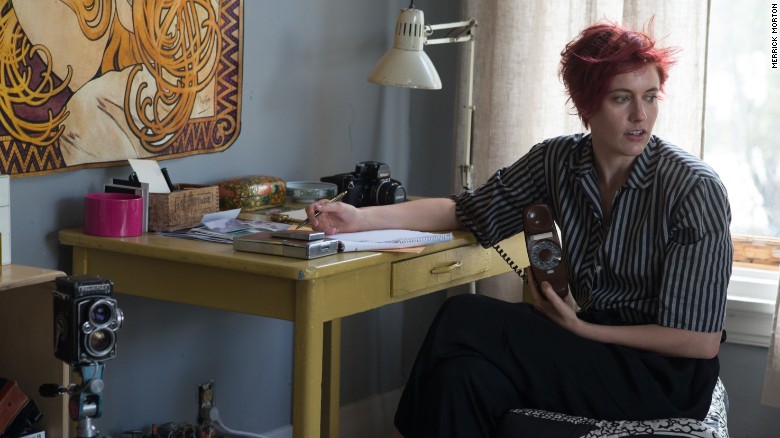
Concerned about her son becoming an aimless, thoughtless grown man, Dorothea has Jamie's BFF Julie (a wonderfully sullen, sedate Elle Fanning, per usual) and Dorothea's twenty-something punky boarder, Abbie (Greta Gerwig, for once, charming me immensely) act as influencers, shapers, and teachers of her only child on how to understand women and how to be a "real man."


Just as lost as Jamie, the young women impart their knowledge of '70s feminism, post-punk music, and Judy Blume books. And as a true sponge, Jamie absorbs this and tests boundaries in equal measure.

Minus the charming Christopher Plummer storyline, the rest of Mills' previous film Beginners (i.e., Ewan McGregor's love life) suffered from a tweeness that rarely surfaces in Women. And that's what makes this film a much more rewarding treasure.

The slight FX in the movie (sped-up film, psychedelic color trails) add to that stoned '70s dreamy vibe of this coming-of-age story. The non-plot of slightly interconnected vignettes may bore or bug some but for me it harnessed the pace of some of those lazy, sun-bleached '70s films like Breaking Away or something with a teenage Jodie Foster.

The rambling, cigarette-and wine-soaked storyline is solidified in Benning's natural, melancholy performance as mother, teacher, wise soul, and free-spirited oddball. But she remains hopeful of her ragtag household.


The quaint vibe of huddling around a TV set to watch a Presidential speech, or dancing around bedrooms trying to dissect her son's punk vinyl playing on the beat-up turntable, all this nostalgia is palpable in Women for a slowed-down, pre-plugged in life. The story seems to revel in hands-off parenting, trial-and-error life lessons, and driving along the Pacific with no intention to record or photograph anything with a phone, and all with a message ahead of its time: Don't record it, be it.